Why Your Home's Foundation Is the Last Place to Cut Corners
Every home improvement project has a budget, and every budget has a point where cutting corners starts to feel tempting. Maybe you choose a slightly thinner countertop, skip the premium paint for the garage, or go with the second-tier appliance instead of the top-of-the-line model. For most things in a home, those compromises are acceptable. The consequences are usually cosmetic or easily corrected.
But there is one part of every structure where cutting corners is never acceptable — and where the consequences of doing so are neither cosmetic nor easily corrected. That part is the foundation.
A concrete foundation is not just another line item in a construction budget. It is the structural element that every other part of your home or building depends on. Get it right and everything above it has the support it needs to perform for decades. Get it wrong and the problems that follow will cost far more to fix than what was saved in the first place — if they can be fixed at all.
This is especially true in the Dallas-Fort Worth area, where expansive clay soil creates some of the most demanding conditions for concrete foundations found anywhere in the country.
What "Cutting Corners" Actually Means in Foundation Construction
When contractors cut corners on a concrete foundation, it's rarely obvious to the homeowner — at least not immediately. The shortcuts happen beneath the surface, during steps that are out of sight and therefore easy to rush or skip without the client noticing.
Here's what cutting corners on a foundation actually looks like in practice:
Inadequate Base Preparation
A proper foundation requires thorough site preparation — excavating to the correct depth, compacting the soil, and installing an appropriate sub-base of gravel or crushed stone that provides uniform support for the slab. Skipping or rushing this step means the concrete is sitting on an inconsistent base that will allow differential settling — where different parts of the slab sink at different rates — leading to cracking and structural problems that show up months or years later.
Insufficient Reinforcement
Reinforcement — whether rebar grids or post-tension cables — is what gives a concrete foundation the tensile strength to handle soil movement, temperature cycling, and load variations without cracking. In DFW specifically, where expansive clay soil exerts significant upward and lateral pressure on foundation slabs, reinforcement needs to be designed for local conditions, not just minimum code requirements.
A contractor who uses less reinforcement than the project requires, places it incorrectly, or skips it entirely on the assumption that the inspector won't notice is compromising the structural integrity of the foundation in a way that will never be visible until the damage is done.
Wrong Concrete Mix
Foundation concrete needs to meet minimum strength requirements specified for the load and soil conditions of the project. Using a weaker mix to save money on materials is a shortcut that affects the long-term performance of the foundation and cannot be corrected after the pour.
Skipping the Vapor Barrier
A plastic vapor barrier between the sub-base and the concrete slab prevents ground moisture from migrating upward through the foundation. In DFW's climate, moisture management is critical for foundation health and for the structure built on top of it. Skipping the vapor barrier is a hidden shortcut with long-term consequences for moisture intrusion and slab durability.
Rushing the Cure
Concrete gains its strength through the curing process, which takes days. A contractor who loads a foundation before it has adequately cured — by framing walls on top of it too quickly, for example — is compromising the strength of the slab before it ever gets the chance to reach its full capacity.
The Real Cost of a Bad Foundation
The reason cutting corners on a foundation is so costly is that foundation problems compound over time and affect every element of the structure built on top of it.
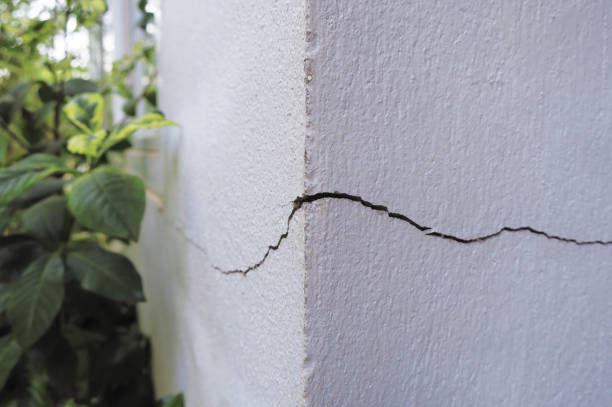
A foundation that settles unevenly causes walls to crack, doors and windows to go out of square, floors to slope, and in severe cases, the structural integrity of the entire building to be compromised. Repairing foundation damage — after the structure above it has already been affected — is one of the most expensive repair categories in residential construction.
Foundation repair in DFW can range from several thousand dollars for minor issues to tens of thousands for significant structural repairs, and in cases where the damage is severe enough, the cost of repair approaches or exceeds the cost of demolishing and rebuilding the affected structure entirely.
Compare that to the cost of doing it right the first time — a properly engineered, reinforced, and poured foundation that performs for decades — and the math is not close.
Why DFW Foundations Face Unique Challenges
The Dallas-Fort Worth area is one of the more challenging regions in the country for foundation construction, and understanding why helps explain why proper installation is so non-negotiable here.
Expansive Clay Soil
As discussed throughout this guide, DFW's expansive clay soil shrinks and swells dramatically with moisture changes. The pressure this soil exerts on a foundation slab — from below and from the sides — is significant. Foundations that are engineered specifically for expansive soil conditions, with appropriate reinforcement density, post-tension systems, and moisture management, perform dramatically better than those built to generic standards.
Climate Extremes
DFW experiences significant temperature swings between seasons, and the occasional severe drought followed by heavy rainfall creates dramatic cycles of soil shrinkage and expansion. These cycles stress foundations over time, and foundations that weren't built to handle them show the effects through cracking, settling, and moisture intrusion.
Flash Flooding and Heavy Rain
DFW's storm events can be intense, and poor drainage around a foundation can lead to rapid soil saturation that dramatically increases the pressure on foundation slabs. Proper grading and drainage planning around a foundation is not optional in this region.
What a Properly Built Foundation Looks Like
Understanding what proper foundation construction looks like is your best protection against a contractor who cuts corners.
A properly built concrete foundation in DFW starts with a thorough site evaluation — understanding the soil conditions, drainage patterns, and load requirements of the specific project. The site is then excavated and graded precisely, with attention to the drainage slopes that will direct water away from the foundation for its entire life.
A compacted gravel or crushed stone sub-base is installed to provide uniform support and improve drainage beneath the slab. A vapor barrier is placed over the sub-base to manage moisture. Reinforcement — appropriately specified for DFW soil conditions — is placed carefully within the forms before any concrete is poured.
The concrete mix is specified for the strength requirements of the project and placed in a single continuous pour where possible to minimize cold joints. The surface is finished appropriately and the curing process is managed to ensure the slab reaches its full designed strength before any load is applied.
None of these steps are optional. None of them are shortcuts that can be taken without consequence. And all of them are things you should be able to verify with your contractor before the project begins.
Questions to Ask Before Anyone Pours Your Foundation
Before signing a contract for a foundation project, ask your contractor these specific questions:
What sub-base material will you use and how deep will you compact it? The answer should specify gravel depth and compaction method.
What reinforcement system are you using and why is it appropriate for this soil condition? In DFW, the answer should reflect local expansive soil requirements.
What PSI concrete mix are you specifying for this project? Residential foundations in DFW typically need at minimum 3,000 PSI, with higher strength specified for heavier loads.
Will you install a vapor barrier? The answer should be yes.
What is your curing plan? The answer should include a timeline and any measures being taken to protect the fresh concrete from temperature extremes.
A contractor who can answer all of these questions clearly and specifically is a contractor who knows what they're doing. A contractor who deflects, generalizes, or seems unfamiliar with the questions is one worth reconsidering.
The Long View: Foundation Quality Is a Lifetime Investment
A concrete foundation is not a 5-year investment or a 10-year investment. It is a lifetime investment — the structural base of a building that will stand for decades. The decisions made during foundation construction affect everything built above it for the entire life of the structure.
Homeowners who understand this choose their foundation contractor carefully, ask the right questions, and prioritize quality over the lowest bid. The savings achieved by cutting corners on a foundation are always temporary. The consequences of those shortcuts are permanent.
Why Prestige Concrete Takes Foundation Quality Seriously
At Prestige Concrete, we've been pouring foundations across the Dallas-Fort Worth area for over 25 years. We've seen what happens when foundations are built without proper preparation, reinforcement, and curing — and we've built our reputation on doing the opposite.
Every foundation we pour is built with thorough site preparation, appropriate reinforcement for DFW soil conditions, quality concrete mixes, proper vapor barriers, and adequate curing time. We don't take shortcuts because we understand that our reputation is built on results that last — and so is yours.
If you're planning a project that requires a concrete foundation, we're ready to build it the right way.

Don't compromise on the most important part of your structure. Contact Prestige Concrete today for a free estimate and let our experienced team build a foundation that's engineered for DFW and built to last a lifetime.


.svg)


.svg)
.svg)