Is a Concrete Patio Worth It? What DFW Homeowners Are Saying Yes To
If you've been thinking about upgrading your backyard but haven't pulled the trigger yet, there's a good chance a concrete patio has crossed your mind. It's one of the most popular outdoor home improvements in the Dallas-Fort Worth area — and for good reason. But is it actually worth the investment? What do you get out of it, how long does it last, and is it the right choice for your specific property?
This guide answers all of those questions honestly and thoroughly so you can make a confident decision about whether a concrete patio is the right move for your DFW home.
What a Concrete Patio Actually Gives You
Before getting into costs and comparisons, it's worth being specific about what a concrete patio delivers — because it's more than just a flat surface to put furniture on.
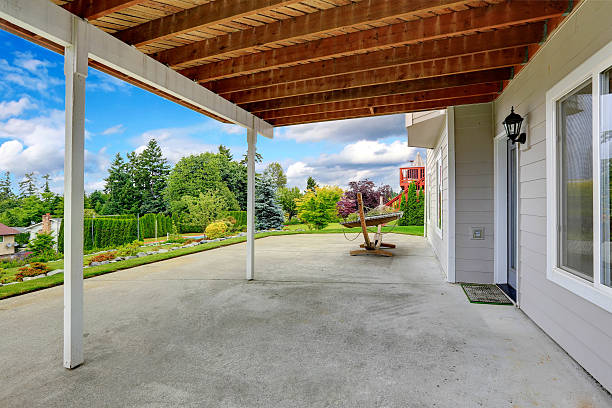
A concrete patio gives you a permanent, low-maintenance outdoor living space that handles DFW weather year-round. It gives you a defined area that separates your outdoor living zone from the lawn, eliminates the mud and grass wear that comes with high-traffic backyard areas, and creates a foundation for everything else you might want to do with your outdoor space — an outdoor kitchen, a pergola, a fire pit area, or simply a clean space to relax and entertain.
In DFW where the climate allows for outdoor living for the majority of the year, having a quality outdoor space isn't a luxury — it's a meaningful extension of your home's livable square footage.
Concrete vs. Other Patio Materials in DFW
Homeowners considering a patio have several material options — pavers, flagstone, decomposed granite, wood decking, and concrete among them. Each has a place, but in DFW specifically, concrete holds several distinct advantages over the alternatives.
Concrete vs. Pavers
Pavers are a popular choice for patios and they can look beautiful when first installed. But over time, pavers shift. DFW's expansive clay soil moves with moisture changes, and individual pavers settle unevenly, creating trip hazards and an increasingly uneven surface that requires periodic releveling. Weeds grow between the joints, and the gravel base underneath can erode. Concrete, by contrast, is a single continuous surface that moves as a unit and doesn't develop the joint problems that come with pavers.
Concrete vs. Wood Decking
Wood decks require significant ongoing maintenance — staining, sealing, and eventual board replacement — and they're vulnerable to the moisture and insect issues that come with DFW's climate. A composite deck reduces some of those issues but at a higher cost. A concrete patio requires a fraction of the maintenance and lasts significantly longer than any wood or composite decking option.
Concrete vs. Flagstone
Natural flagstone is beautiful but expensive, requires professional installation to perform well, and the irregular joints between stones create both weed and drainage management challenges. Concrete can be finished to mimic the appearance of flagstone through stamping while delivering the structural consistency and low maintenance of concrete.
The Bottom Line on Materials
For DFW homeowners prioritizing longevity, low maintenance, and value, concrete is the most practical and cost-effective patio material available. Its design flexibility — through finishing options, stamping, and color — means you don't have to sacrifice appearance to get those benefits.
How Much Does a Concrete Patio Cost in DFW?
Patio cost is one of the first questions homeowners ask, and it's a fair one. Concrete patio pricing in DFW depends on several factors:
Size
The square footage of the patio is the primary cost driver. Larger patios require more materials and labor, which increases the total project cost proportionally.
Finish Type
A standard broom finish is the most affordable option. Decorative finishes — stamped concrete, exposed aggregate, or colored concrete — add to the cost but also add significant visual value. The premium for a stamped or colored finish is typically well worth it for homeowners who want the patio to be a design feature rather than just a functional surface.
Site Conditions
Properties that require significant grading, demolition of an existing patio, or drainage work add to the scope and cost of the project.
Thickness and Reinforcement
A standard residential patio slab is typically 4 inches thick with appropriate reinforcement. Patios that will support heavier structures like pergolas or outdoor kitchens may require additional thickness and reinforcement.
Getting a free estimate from a qualified local contractor is the best way to get an accurate number for your specific project. Prestige Concrete provides free estimates for all patio projects across the DFW area.
The Return on Investment of a Concrete Patio
One of the strongest arguments for a concrete patio is the return it delivers on your investment — both in terms of how you use your home and what it's worth on the market.
Lifestyle Value
A concrete patio creates usable outdoor living space that DFW homeowners actually use. Year-round entertaining, morning coffee, evening relaxation, outdoor dining — a quality patio becomes a part of daily life in a way that few home improvements do. That lifestyle value is real even if it doesn't show up directly on a property appraisal.
Property Value
Real estate professionals consistently point to outdoor living spaces as a meaningful driver of home value, particularly in DFW where outdoor entertaining is a year-round activity. A well-designed concrete patio increases your home's appeal to buyers and can deliver a strong return at resale.
Long-Term Cost Savings
A concrete patio installed once and maintained properly doesn't need to be replaced for 30 to 50 years. Compare that to wood decking that needs board replacement and refinishing every several years, or pavers that need periodic releveling and weed management, and the long-term cost advantage of concrete becomes clear.
Design Options That Make Concrete Patios Stand Out
One thing that surprises many homeowners is how many design options are available with concrete. A concrete patio doesn't have to be plain gray — there are several ways to customize the appearance to match your home and personal style.
Stamped Concrete
Stamped concrete uses textured molds pressed into the surface before it cures to create patterns that mimic natural stone, brick, slate, wood, or other materials. A stamped concrete patio can be a genuinely striking design feature that elevates the entire look of your backyard.
Exposed Aggregate
An exposed aggregate finish reveals the natural stone and pebbles within the concrete mix, creating a textured surface with a natural, organic appearance. This finish is popular for homeowners who want a more natural look without the maintenance requirements of actual stone.
Integral Color and Staining
Concrete can be colored during the mix or after installation with surface stains to create a wide range of tones and effects. From warm terracotta tones to cool slate grays, colored concrete can be tailored to complement virtually any home exterior.
Borders and Patterns
Decorative scoring — saw cuts made into the surface after installation — can create geometric patterns, borders, and design elements that add visual interest to an otherwise plain surface.
What the Installation Process Looks Like
Understanding what goes into a concrete patio installation helps you evaluate contractors and know what to expect from a quality project.
Site Preparation
The area where the patio will be installed needs to be cleared, graded, and prepared with an appropriate sub-base. In DFW, where clay soil can create drainage challenges, getting the site prep right is the foundation of a long-lasting patio.
Forming
Forms are set to define the shape and edges of the patio. This is where the layout is finalized and any curves or custom shapes are established.
Reinforcement Placement
Rebar or wire mesh reinforcement is placed within the forms to give the slab the tensile strength it needs to handle soil movement and load without cracking.
Pouring and Finishing
Concrete is poured and worked to ensure an even surface, then finished to the desired texture or pattern. Decorative finishes require experienced technique and precise timing to execute correctly.
Curing
The concrete cures over several days, gaining strength progressively. Allowing adequate curing time before using the patio is important for long-term performance.
At Prestige Concrete, most residential patio projects are completed within 2 to 3 days with minimal disruption to your property.
Common Questions DFW Homeowners Ask About Concrete Patios
Can I add a concrete patio to an existing backyard without major disruption?
Yes. Most concrete patio installations require minimal disruption to the surrounding yard. Experienced contractors work efficiently and clean up after themselves, leaving your property in good condition.
How soon can I use my new concrete patio after installation?
Foot traffic is typically safe within 24 to 48 hours of pouring. Heavy furniture and full use should wait until the concrete has cured fully — typically around 7 days.
Do I need a permit for a concrete patio in DFW?
Permit requirements vary by municipality. A reputable local contractor will be familiar with the requirements in your specific area and can advise you on whether a permit is needed for your project.
How do I maintain a concrete patio in DFW's climate?
Regular cleaning, sealing every 2 to 3 years, and prompt crack repair are the main maintenance requirements. Managing drainage around the patio — making sure water flows away from the house and doesn't pool on the surface — is especially important in DFW.
Why Prestige Concrete Builds Patios DFW Homeowners Love
A concrete patio is only as good as the contractor who builds it. Proper site preparation, quality materials, appropriate reinforcement, and skilled finishing are what separate a patio that looks great and performs for decades from one that starts cracking and settling within a few years.
At Prestige Concrete, we've been building concrete patios across the Dallas-Fort Worth area for over 25 years. We understand DFW's specific soil and climate conditions, and we bring that knowledge to every patio project we take on. Whether you want a simple, clean broom-finished patio or a fully stamped and colored outdoor showpiece, we have the experience and craftsmanship to deliver results you'll be proud of for decades.
The Bottom Line
A concrete patio is absolutely worth it for DFW homeowners who want a low-maintenance, durable outdoor living space that adds real value to their property. It outperforms every competing material on longevity and maintenance, delivers meaningful lifestyle and property value benefits, and — when finished with one of the many available design options — can be a genuine standout feature of your home's exterior.
If you've been on the fence, the math and the lifestyle case both point in the same direction.

Ready to add a concrete patio that transforms your outdoor space? Contact Prestige Concrete today for a free estimate and let our team design and build a patio that's made for DFW living.


.svg)


.svg)
.svg)