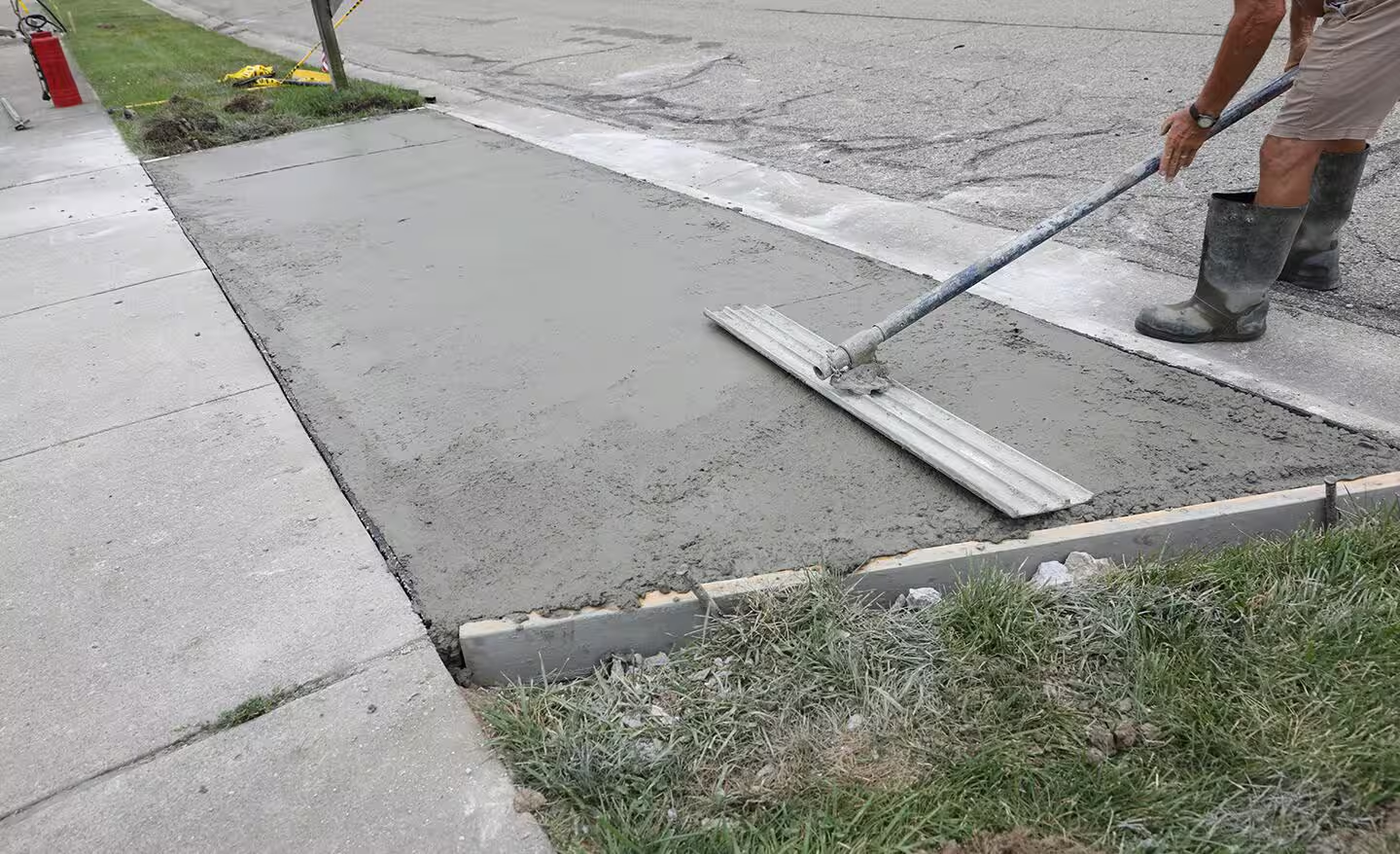
Concrete is one of the most durable and long-lasting materials used in construction—but even the strongest concrete can develop cracks if not properly installed and maintained. Whether you’re investing in a driveway, walkway, foundation slab, or retaining wall, knowing how to prevent cracking helps ensure your project lasts for decades.
Let’s dive into what causes concrete to crack and how to minimize the risk.
Concrete is a rigid material, and as it cures or is exposed to changing environmental conditions, it naturally expands and contracts. If this movement is not accounted for during installation, the result can be surface or structural cracks.
Here are the most common reasons concrete cracks:
Before pouring concrete, the subgrade (ground beneath the pour) must be stable, compacted, and leveled. If this step is rushed or skipped, the ground may shift or settle unevenly over time, causing cracks to form in the surface above.
At Prestige Concrete, we take site prep seriously to prevent movement beneath your concrete structure.
Different projects require different mixes. For example, a slab supporting a shed or garage needs a mix that’s stronger than one used for a garden walkway. The right ratio of water, cement, and aggregate is essential.
A too-wet mix can weaken the final product, while too-dry can lead to shrinkage cracks. We tailor every mix to match the intended use and structural load.
Control joints are pre-planned grooves or separations added to the surface to guide natural cracking in a straight line. Without them, cracks can form randomly across your slab or driveway.
Proper spacing and depth of joints are critical to their success—and our team includes them in every appropriate project.
Curing is the process of keeping the concrete moist and at a stable temperature while it hardens. Improper curing can lead to rapid drying, which causes shrinkage and surface cracks.
We implement the right curing process—whether it’s misting, using curing compounds, or covering with plastic sheeting—depending on the weather and project scope.
Newly poured concrete needs time to gain strength. Driving or placing heavy equipment on a slab or driveway too soon is a sure way to cause cracking. We recommend waiting at least 7 days before allowing light foot traffic, and 28 days for vehicle traffic.
Sealing your concrete can help prevent surface water from penetrating and causing expansion or freeze-thaw damage. A properly sealed driveway or walkway is better protected against weather, stains, and wear.

At Prestige Concrete, we take every precaution to ensure your concrete slabs, driveways, walkways, and retaining walls are installed with expert care and durability in mind. From prep to pour to cure, we focus on preventing cracks before they happen.
Contact us today to schedule your next concrete project with a team that prioritizes long-lasting quality.


.svg)


.svg)
.svg)