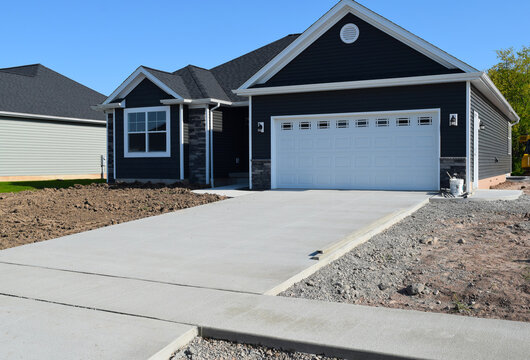
Concrete vs. Asphalt Driveways: Which One Is Right for Your DFW Home?
If you're replacing or installing a new driveway, one of the first decisions you'll face is choosing between concrete and asphalt. Both are common driveway materials, both have their advocates, and both will get the job done — but they perform very differently over time, especially in a climate like Dallas-Fort Worth. Understanding the real differences between concrete and asphalt driveways helps you make a decision you'll be satisfied with for decades rather than one you'll second-guess a few years down the road.
This guide breaks down everything DFW homeowners need to know about concrete vs. asphalt driveways — from upfront costs and long-term value to performance in Texas weather and maintenance requirements.
The Basic Difference Between Concrete and Asphalt
Before getting into the specifics, it helps to understand what these two materials actually are.
Concrete is a mixture of cement, water, sand, and aggregate that hardens into a rigid, stone-like surface. Once cured, concrete is one of the strongest and most durable building materials available and does not require ongoing treatment to maintain its structural integrity.
Asphalt is a mixture of aggregate and bitumen — a petroleum-based binder — that creates a flexible, dark-colored surface. Asphalt remains slightly flexible even after it hardens, which is both a strength and a weakness depending on the conditions it's exposed to.
Both materials can make a functional driveway, but their performance characteristics differ significantly in DFW's specific climate and soil conditions.
Upfront Cost: Asphalt Is Cheaper Initially
One of the most common reasons homeowners consider asphalt is the lower upfront cost. Asphalt driveways generally cost less per square foot to install than concrete driveways, which can make a meaningful difference on a large driveway project.
However, upfront cost is only part of the financial picture. The total cost of ownership over the life of a driveway tells a very different story, and that's where concrete begins to pull ahead significantly.
Long-Term Cost: Concrete Wins Decisively
Asphalt driveways require significantly more maintenance than concrete over their lifetime. Asphalt needs to be sealed every 3 to 5 years to maintain its surface and prevent oxidation and cracking. It typically needs to be resurfaced every 10 to 15 years as the surface degrades. Repairs are more frequent because asphalt is more susceptible to cracking, potholing, and edge deterioration.
A concrete driveway, by contrast, requires sealing every few years but does not need resurfacing and holds up for 30 to 50 years with proper care. When you factor in the repeated cost of asphalt maintenance and resurfacing over the same time period, the long-term cost of an asphalt driveway often exceeds that of concrete.
For DFW homeowners planning to stay in their home for the long term, concrete is almost always the more economical choice when total cost of ownership is considered.
Performance in Texas Heat: Concrete Is the Clear Winner
This is where the difference between concrete and asphalt becomes most apparent in DFW. Texas summers are brutal, with temperatures regularly exceeding 100 degrees and heat index values climbing even higher. That heat has very different effects on these two materials.
Asphalt contains petroleum-based binders that soften in extreme heat. In DFW summers, an asphalt driveway can become soft enough to be damaged by vehicle tires, high heels, and even heavy outdoor furniture left sitting on it. This softening accelerates wear and can cause permanent surface damage during the hottest months of the year.
Concrete is not affected by heat in the same way. A concrete driveway maintains its hardness and structural integrity regardless of temperature, making it far better suited to the DFW climate. In fact, concrete's lighter color actually reflects heat rather than absorbing it, keeping the surface cooler than asphalt on hot days — a meaningful difference if you spend time outside.
Performance in Cold Weather: Asphalt Has a Slight Edge
This is the one area where asphalt has a genuine advantage. Asphalt's flexibility allows it to expand and contract slightly with temperature changes without cracking as readily as concrete. In climates with frequent freeze-thaw cycles, this flexibility can extend the life of an asphalt surface.
However, DFW's climate does not experience the kind of severe or frequent freeze-thaw cycles that make this advantage significant. Winters in North Texas are mild compared to northern states, and the occasional hard freeze is not enough to make asphalt's flexibility a meaningful benefit for most DFW homeowners. The far more significant weather factor in DFW is summer heat — and concrete handles that dramatically better.
Appearance: Concrete Offers More Options
Asphalt driveways are black and stay black — there is essentially no variation in appearance or finish options. Over time, asphalt fades to a dull gray as it oxidizes, which requires resealing to restore the dark color.
Concrete offers a wide range of appearance options. The natural light gray of standard concrete is clean and professional, but homeowners who want more can choose from stamped patterns, exposed aggregate finishes, integral colors, and decorative scoring. A concrete driveway can be customized to complement your home's exterior in ways that asphalt simply cannot match.
From a curb appeal standpoint, a well-finished concrete driveway consistently makes a stronger visual impression than asphalt.
Maintenance Requirements: Concrete Is Lower Effort
Asphalt maintenance requirements include sealing every 3 to 5 years, crack filling as needed, pothole repair, and eventual resurfacing. The cumulative time and cost of asphalt maintenance adds up significantly over a 20 to 30 year period.
Concrete maintenance is simpler: sealing every 2 to 3 years and occasional cleaning is typically all that's required. Concrete doesn't need resurfacing, doesn't develop potholes, and doesn't require the same frequency of repair work that asphalt does.
For homeowners who want a driveway they can largely ignore beyond basic upkeep, concrete is the lower-maintenance choice by a significant margin.
Environmental Considerations
Asphalt is a petroleum product, which means its production is tied to oil refining. It also absorbs heat, contributing to the urban heat island effect that makes developed areas hotter than surrounding natural landscapes.
Concrete has a higher carbon footprint in its production due to the cement manufacturing process, but its longer lifespan means it needs to be replaced less frequently, reducing the total environmental impact over time. Concrete's light color also reflects rather than absorbs heat, which has a modest cooling effect on surrounding areas.
Neither material is without environmental impact, but concrete's longevity and heat-reflective properties make it a reasonable choice for environmentally conscious homeowners.
Which One Is Right for Your DFW Home?
For most DFW homeowners, the answer is concrete. The combination of performance in Texas heat, longevity, low maintenance, design flexibility, and long-term cost efficiency makes concrete the superior choice for driveways in this region. The lower upfront cost of asphalt is real, but it doesn't hold up against the math of long-term ownership.
The cases where asphalt might make more sense are limited — primarily situations where budget constraints make the lower upfront cost a deciding factor, or for homeowners who know they won't be in their home long enough to benefit from concrete's long-term advantages.
For anyone planning to stay in their DFW home for more than a few years and wanting a driveway they can rely on without constant maintenance, concrete is the smart call.
Why Prestige Concrete Is DFW's Choice for Concrete Driveways
At Prestige Concrete, we've been installing concrete driveways across the Dallas-Fort Worth area for over 25 years. We understand the specific demands that DFW's climate and soil conditions place on driveways, and every project we complete is built with the reinforcement, quality materials, and craftsmanship needed to perform for decades.
If you're ready to invest in a concrete driveway that outlasts and outperforms asphalt in every category that matters for DFW homeowners, our team is ready to deliver.

Ready to make the switch to a concrete driveway built for DFW's climate? Contact Prestige Concrete today for a free estimate and let our team show you what a quality concrete driveway looks like.


.svg)


.svg)
.svg)